

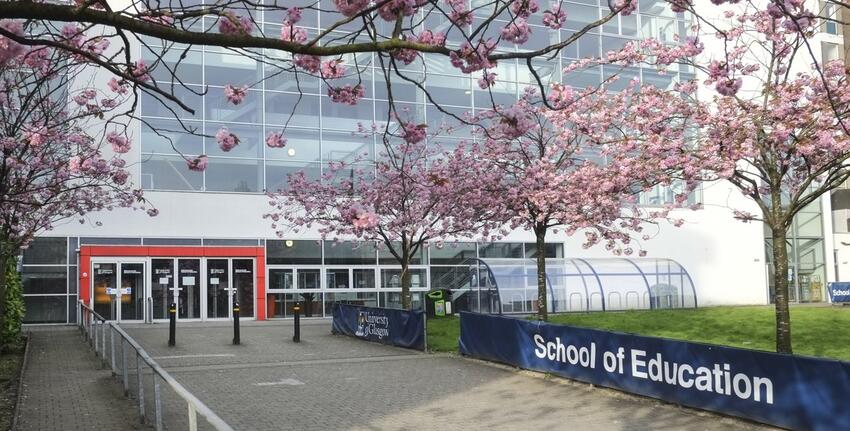
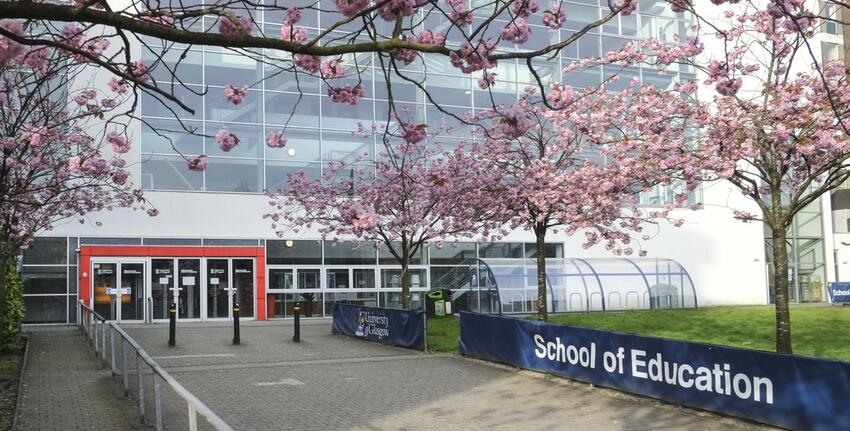

Building on our team’s ESRC-IAA project ‘Towards maximising international PhD students’ experience in the UK’ and with additional funding from the UK Council for Graduate Education; a team from the School of Education at the University of Glasgow organised an event entitled ‘Enhancing the Student Experience for International Doctoral Students’ in Glasgow on Tuesday 28th November 2017.

Ageism towards older people is a relatively unresearched topic. The same applies to intergenerational learning and issues related to the inclusion of older men. It therefore is interesting to bring all these three components onto one table. The first results of our survey in Estonia about older rural men’s readiness and obstacles to passing on their skills and knowledge indicated limited use of older men’s potential (Tambaum & Kuusk, 2014).
Adult Learning Australia (ALA) has declared 2018 to be a Year of Lifelong Learning. This raises many questions about why Lifelong Learning should be a priority. How might policy to promote Lifelong Learning develop? Are there particular outcomes which should be anticipated from a year focused on lifelong learning? How to get the various stakeholders for formal, non-formal and informal learning across various age levels to work together to promote a more coherent and engaged framework for all people to see themselves on a lifelong learning journey?
From ideal to real: Australia does not have a formal lifelong learning policy. A lifelong learning policy would acknowledge learning beyond employment and re-skilling, and highlight its role in social mobility, community building and health and wellbeing. A formal lifelong learning policy would support Australians to:
- reach their potential
- better anticipate transitions
- self-manage their health and wellbeing.

The Universities’ Association for Lifelong Learning (UALL) Student Experience Network invites you to Creative Approaches to Lifelong Learning: Engaging and supporting mature, part-time and widening participation learners in higher education, a one-day event taking a holistic approach to the experiences of part time, mature and widening participation learners throughout their higher education journey, from first contact through to post-graduation.
The aims of this project funded under the aegis of an ESRC Impact Acceleration Account are to:
- Support further work to review and enhance a template to map the engagement of universities with their cities and regions for use in the Technical and Vocational Education and Training (TVET) sector in Hong Kong, Italy and the UK
- Adapt a revised benchmarking tool to create an online version; and
- Promote its use nationally and in an international context.
In recent years, both India and Scotland have made an extensive investment in skill training and education to reduce the unemployment of marginalised youth and enabling their social and occupational mobility (ILO, 2011, 2016). This knowledge exchange project funded through an ESRC Impact Acceleration Account, comprising of a workshop (India) and a seminar (Glasgow), offers an important and timely opportunity for policy makers, practitioners, and academics from India and Scotland to share experiences, develop understandings, and participate in dialogue to provide evidence for the policies and infrastructures that need to be developed and implemented to facilitate the positive engagement of young people in skill training programmes.
This is part of the next phase of DynamicCoast.com and will use the latest monitoring techniques to map and categorise the resilience of the Scottish coast and identify the links between erosion and flooding. The damage that climate change could cause to nearly one fifth of Scotland’s coastline and the steps that could be taken to mitigate it will be forecast in this new two year research project.
Please find featured below and attached the final version of the report from the Lifelong Learning in Australia: From practice to policy workshop, held in Melton City on 28 November 2017, where Professor Michael Osborne was one of our speakers.
Colombia has experienced one of the most protracted civil conflicts in the world, lasting over fifty years and resulting in a high death toll, widespread displacement, and deep social scars. On 27 September 2016, the Colombian Government signed an historic peace agreement with Revolutionary Armed Forces of Colombia - People’s Army (FARC-EP), the main guerrilla group. While the cessation of FARC-EP violence has brought with it great hope for peace, the complexity of the Colombian conflict and the persistence of a variety of legal and illegal armed groups also presents very real challenges.

Here is the latest Cedefop newsletter:
Please find featured below the latest issue of Nexus, the quarterly newsletter of the UNESCO Institute for Lifelong Learning (UIL).
There is a range of scientific evidence about the harm being done to the natural world. Cebellos et al. (2017) argue for a two to three-decade window to do something meaningful about biodiversity loss. In this seminar, Helena Kettleborough explores how we might look at learning anew through the eyes of the planet and the cosmos and see how learning might be delivered differently.
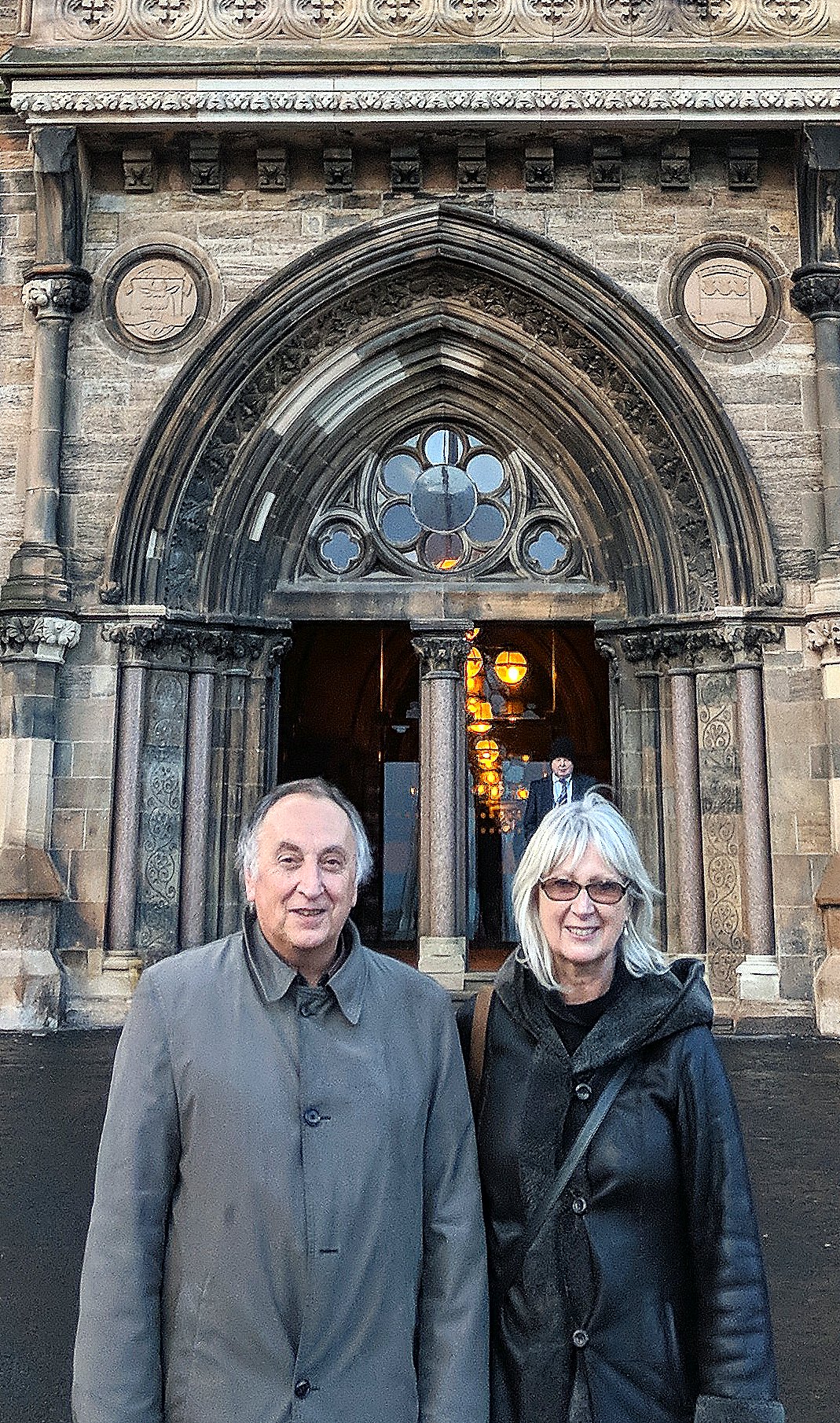
The Strengthening Urban Engagement of Universities in Asia and Africa (SUEUAA) project team were delighted to welcome Professor Caroline Knowles, Programme Director of the British Academy’s Cities and Infrastructure Programme, this week for a meeting in the School of Education at the University of Glasgow. This year, the British Academy’s Global Challenge Research Fund (Cities and Infrastructure) funded 17 projects across the UK, all of which looking at aspects of how to create and maintain sustainable and resilient cities in developing countries, of which SUEUAA is one*.
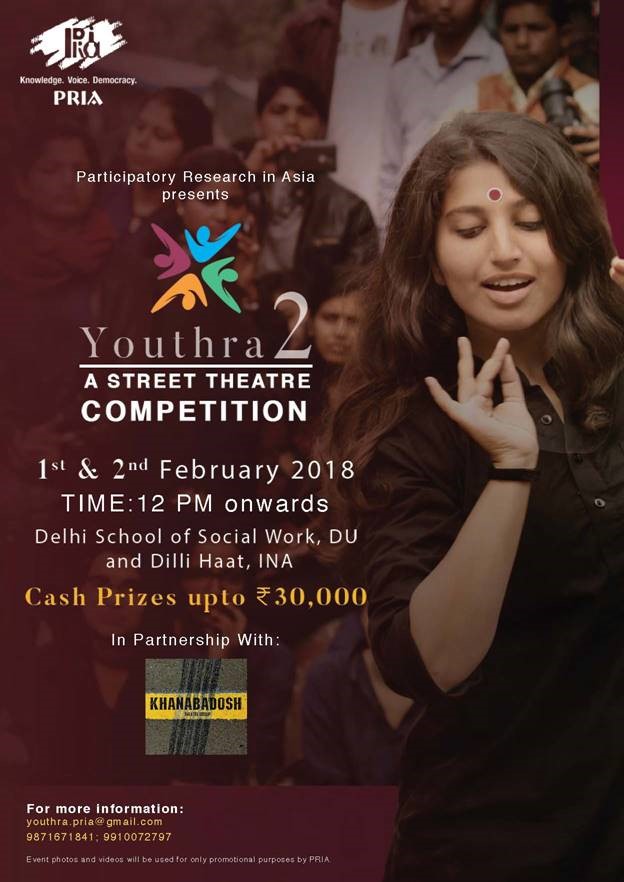
PRIA (Participatory Research in Asia) presents two days (1st and 2nd February 2018) of public theatre and engagement - YOUTHRA 2018.






Latest Comments